A part of the community
AguaClara plants are designed to be seamlessly integrated into the local community to suit the needs of its people


AguaClara plants are designed to be seamlessly integrated into the local community to suit the needs of its people
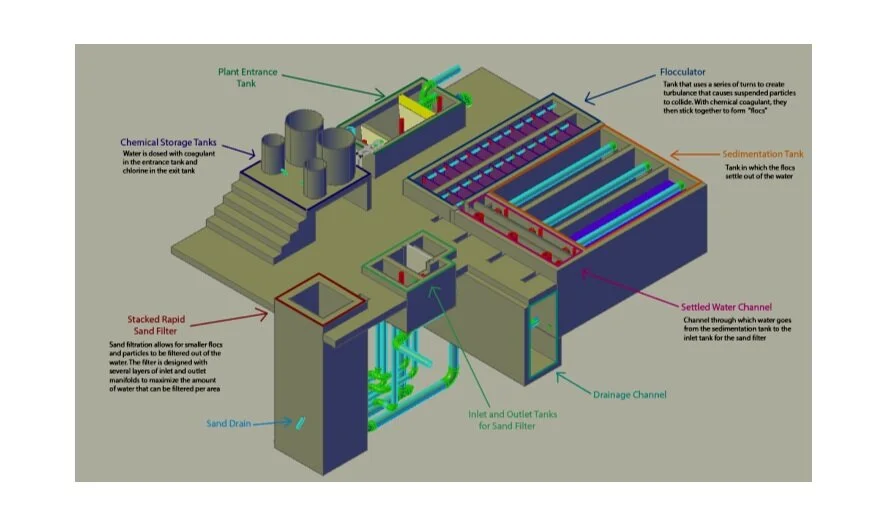
The technology employed in an AguaClara plant uses gravity to power every step of the process. Leveraging this free energy allows for elegantly simple operations, and tremendous cost-savings for the community.
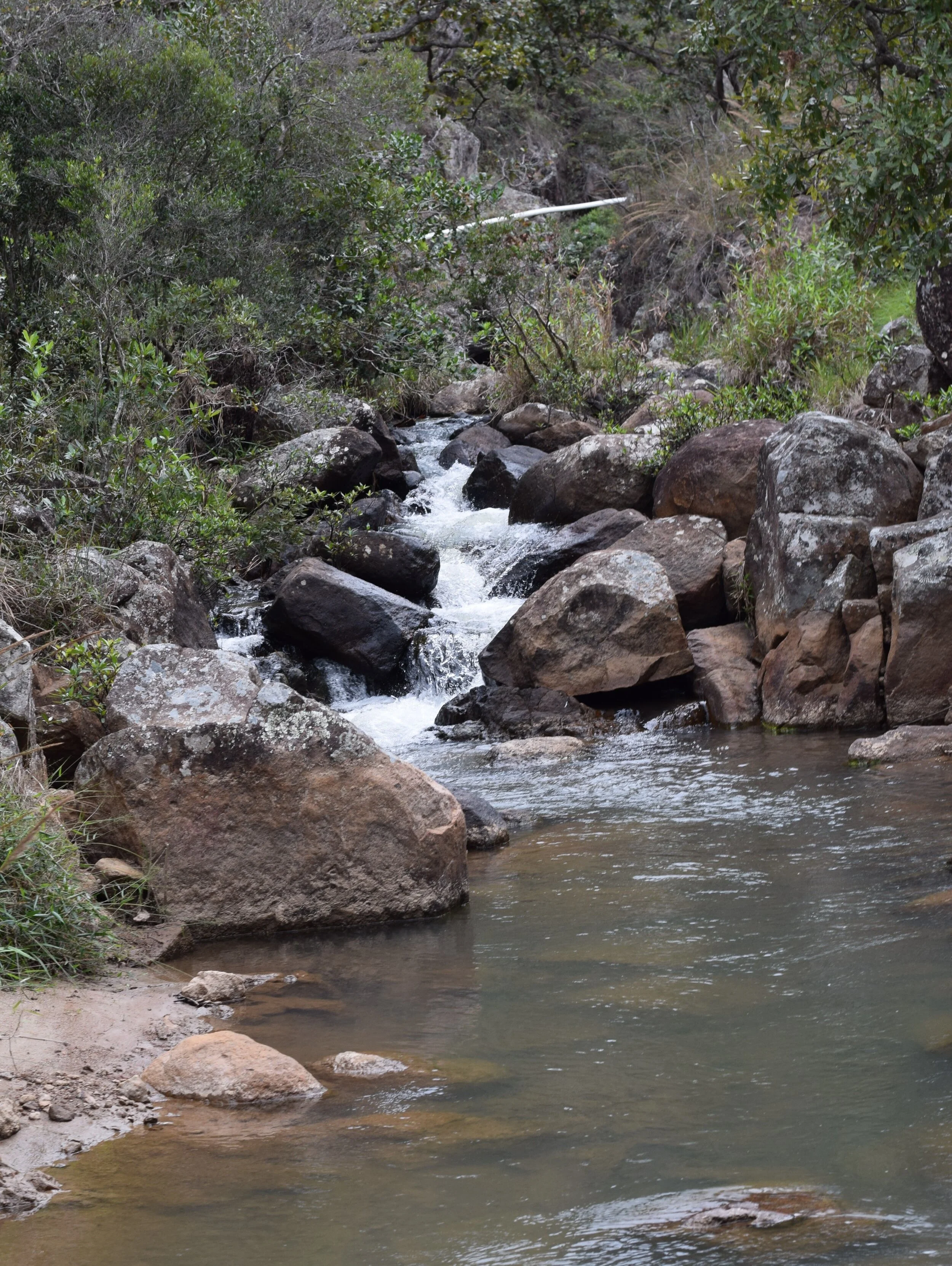
An AguaClara plant receives its water from local surface and groundwater sources.
The raw water is introduced to the plant as a turbid mixture of sediment and organic contaminants.
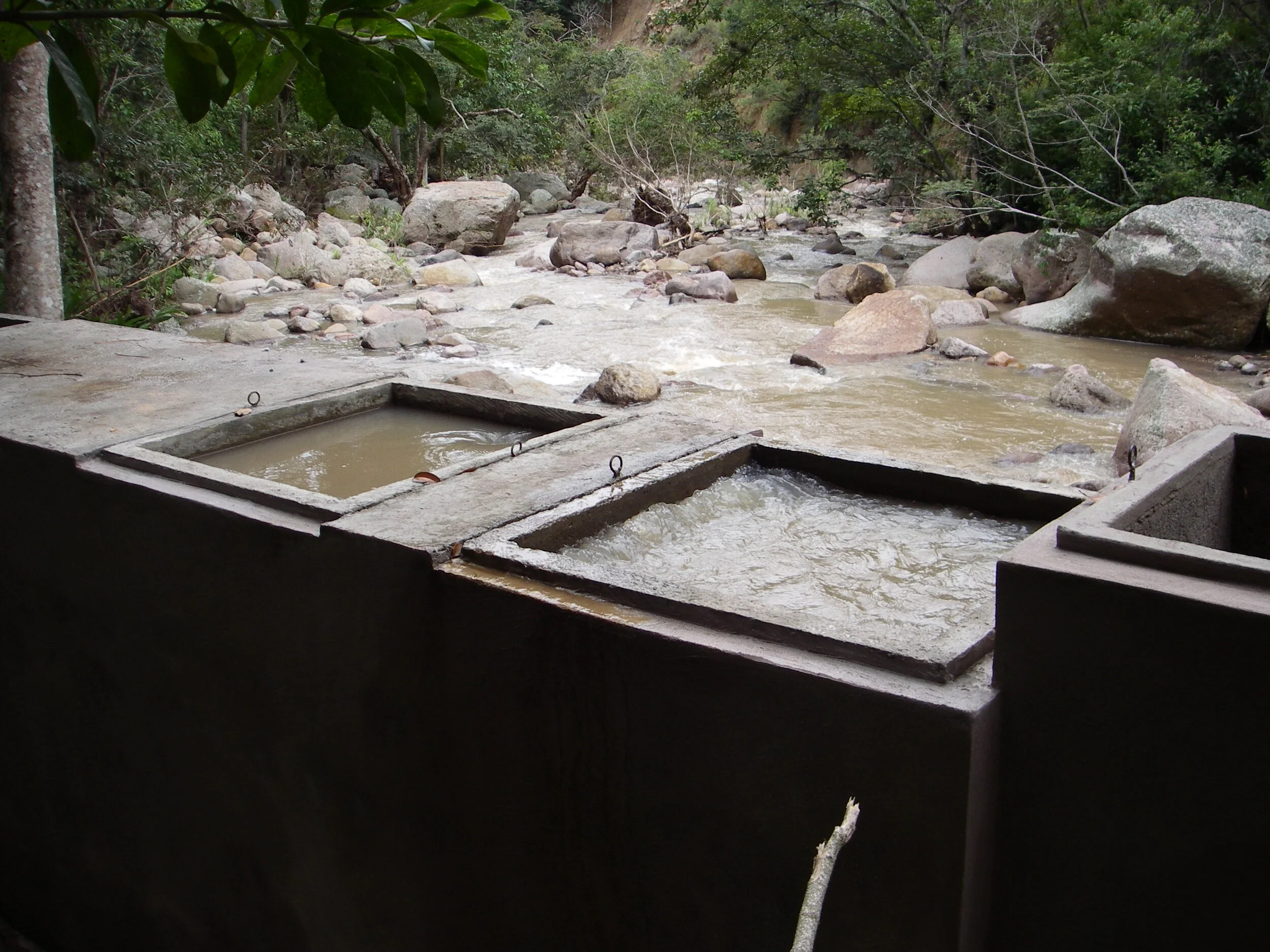
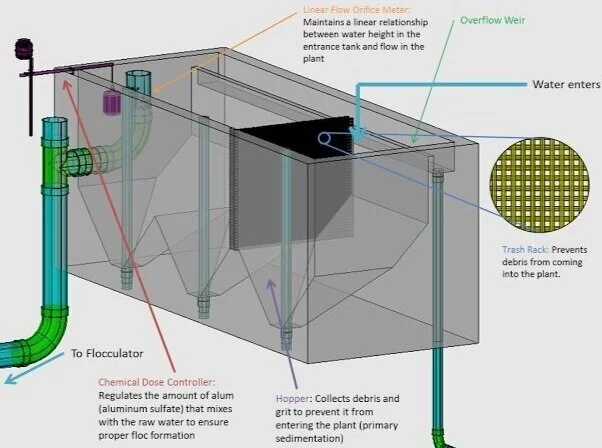
Water enters the plant through a pipeline from the water source, where large grit and sediment are first removed using screens and settling chambers
A sticky compound known as coagulant is added to the water, giving suspended particles a charge that enables them to stick together when they collide.
The flocculator directs the flow of water through a series of sharp, 180 degree turns that cause those particles to collide into each other, forming aggregates called flocs.
As water flows into the sedimentation stage, the dense heavy flocs begin to sink to the bottom. The plates prevent any fine particles from escaping the tank. Jets of water perform two tasks:
1.) suspend a floc blanket to catch any additional stray particles, and
2.) to push the clarified water to the outlet.
The last step of the treatment process is here, as the water flows through our state-of-the-art Stacked Rapid Sand (StaRS) filter. The smallest of particles that remain in the water are filtered out through the pores between sand grains, and as a final measure, the water is dosed with chlorine to ensure complete removal of contamination.